
What makes a wedding bohemian
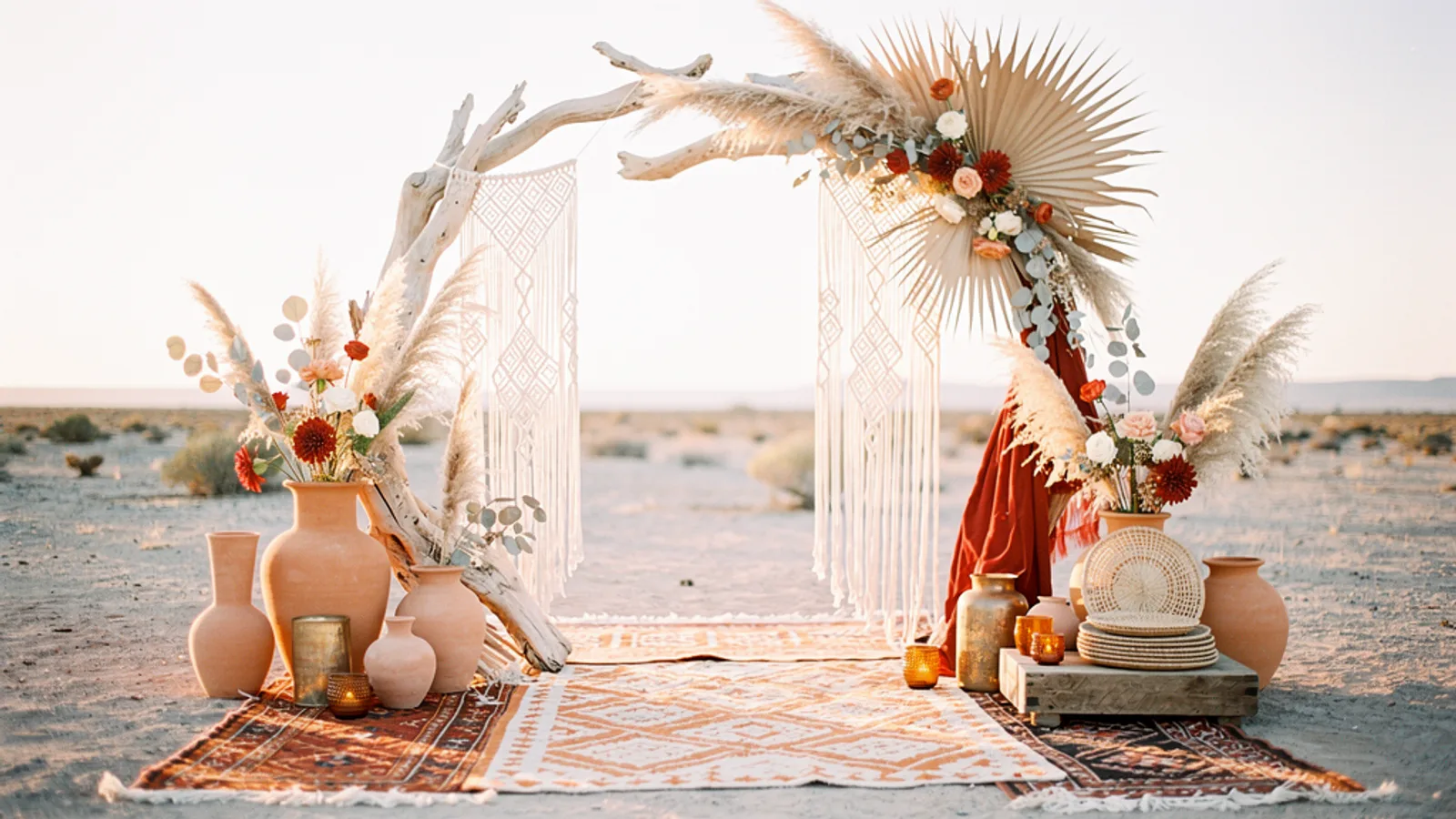
Boho is the loosest of the popular wedding directions. Where a classic wedding is symmetrical and matched, bohemian is gathered and a little undone: mismatched seating, layered rugs, low tables, hanging installations, and florals that look picked rather than arranged. It borrows from the 1970s and from desert and outdoor settings, so it reads warm, tactile, and unfussy. If your instinct is "pretty but not precious", this is your lane.
The colors
Boho palettes are warm and grounded. Build on terracotta () and rust, add a warm neutral like sand or oat (), then bring in sage () or dusty rose () to soften it. A mustard or ochre accent is optional and very boho. Keep saturation low and let the earth tones lead; boho goes wrong when the colors get bright rather than sun-faded.
Materials and decor
Texture does the heavy lifting. Pampas grass, dried palms, macramé, rattan, unglazed pottery, and woven or vintage rugs are the signatures. Mix metals rather than matching them, and lean on candlelight in clusters instead of overhead light. For the table, skip the runner-and-charger uniformity of a formal setting and let plates, glassware, and linen sit a little mismatched on purpose.
The florals
Boho flowers look like they were gathered on a walk. Combine fresh blooms (roses, dahlias, ranunculus) with dried elements like pampas, bunny tails, and wheat, and let the arrangements spill sideways rather than sit in a tidy dome. Hanging floral installations and a loose, oversized bouquet are the two shots that read boho instantly.
The line between boho and festival
This is worth saying plainly. Bohemian tips into music-festival territory when every surface is a prop: macramé on macramé, pampas in every corner, string lights doing all the work. The fix is a tight palette and a few good materials used with restraint. Real pottery, one strong rug, and a considered floral moment land as intentional; a pile of trend props reads as a rented set.
Where it works best
Boho suits outdoor and warm-climate weddings: deserts, ranches, vineyards, backyards, and villas — and late-spring through early-fall dates when you can be outside after dark. It is also one of the more budget-friendly directions, since the relaxed, gathered look forgives a lot and rewards DIY.