Wedding mood boards

Wedding Mood Boards

A wedding mood board is one collection of images, colors, and textures that pins down your look, so every decision after it, from flowers to linens to invitations, has something concrete to match against. This guide covers what to put on one, whether to build it digital or physical, and how to hand it to vendors so they build the wedding you actually pictured.

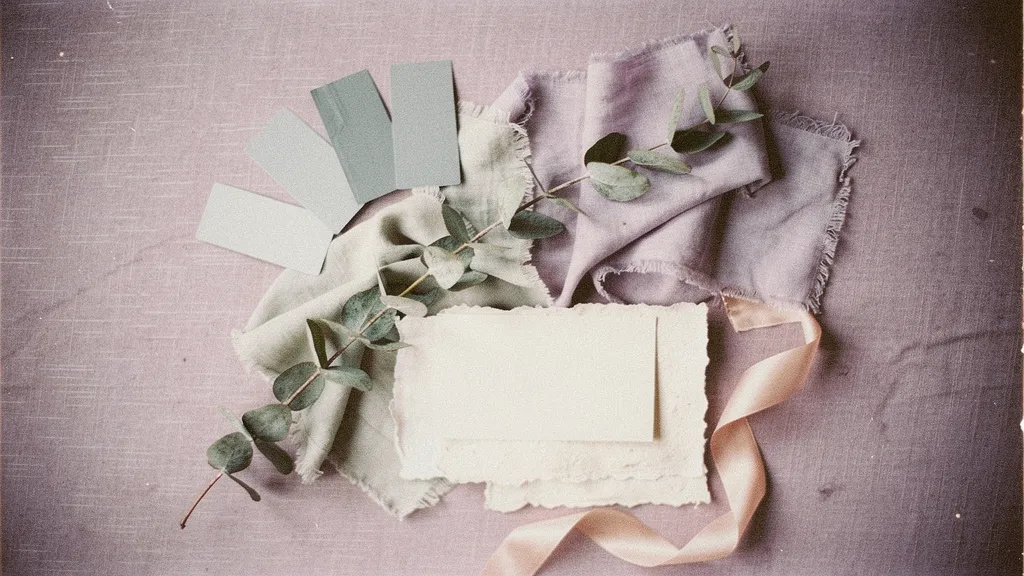
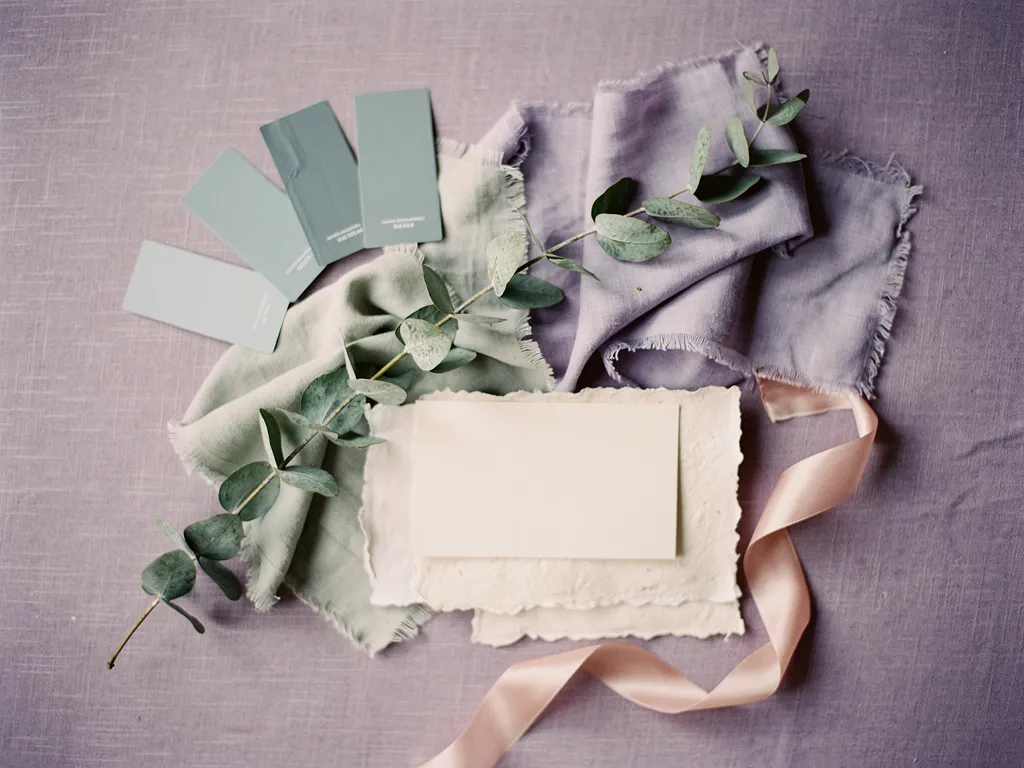
A wedding mood board with fabric swatches, eucalyptus, paint chips, ribbon, and a blank card in soft, muted tones

What a wedding mood board actually does

A wedding mood board is one collection of images, colors, and textures that fixes your look in place. Once it exists, every decision after it has something to check against: does this invitation font belong on the board, or not? Does this bridesmaid dress sit next to these flowers, or clash with them? That single reference is the whole point.

Three things a good board does that a folder of screenshots does not:

  • It catches mismatches early. Two colors you love separately can look muddy together. You see that on a board in seconds, months before it shows up on a tablescape you have already paid for.
  • It keeps vendors on the same page. Your florist, planner, and stationer never talk to each other. The board is the one thing they all see, so they build toward the same look instead of three slightly different ones.
  • It makes decisions faster. When you are choosing between two ribbon colors at 11pm, you do not relitigate the whole wedding. You hold both against the board and pick the one that fits.
What to put on it (and what to leave off)

The strongest boards are edited, not full. Five things earn their place:

  • A color palette, three to five colors. One color leads, one or two support, then a neutral and a metallic. If you have not landed the exact shades yet, the wedding color palette generator gives you copyable hex codes to drop straight onto the board.
  • Two or three flowers. Not a whole garden — the specific blooms you want carrying the look, like garden roses and ranunculus, so a florist knows the shape and density you mean.
  • Texture and materials. Linen, velvet, raw silk, aged brass, kraft paper. Texture is what separates a board that looks expensive from one that looks flat, and it is the part people skip.
  • One setting shot. A single wide photo of a room or table styled in roughly your direction, so the pieces add up to a place rather than a Pinterest grid.
  • One or two details. A place setting, a bouquet, an invitation suite — the close-ups that show how the look resolves at arm's length.

Leave off anything you saved because it was pretty rather than because it fits, any image that pulls the palette in a second direction, and the fifteenth variation on a photo you already have. If you are staring at forty pins, you have a Pinterest board, not a mood board yet.

Digital or physical?

Both work. The right one depends on how texture-heavy your look is and how you plan to share it.

Go digital if…Go physical if…
You want to email it to vendors and edit it oftenYou want to feel the fabric and see true color in daylight
Your look is about color and layout more than materialYour look leans on texture — lace, velvet, heavy paper
You are still moving pieces around every weekYou have landed the direction and want it on a wall

Plenty of couples do both: a digital board to share and a small physical one with actual swatches for the fittings and walk-throughs where color accuracy matters.

How to use it with your vendors

The board only pays off if the people building your wedding actually see it. Three habits make that work:

  • Send it before the first call, not after. A vendor who has seen your board walks into the conversation already knowing the look, so you spend the time on specifics instead of describing "romantic but not too pink" out loud.
  • Name your two or three non-negotiables. Every board has a couple of things that are the point — the exact wine red, the candlelight, the lace. Call those out so a vendor knows what they can flex on and what they cannot.
  • Keep it to one board. Three boards for three vendors drift apart within a month. One board, shared with everyone, is what keeps the flowers, the paper, and the table reading as the same wedding.

Short on time? Take the quiz and we'll build a finished mood board around your taste (palette, florals, and all) in about a minute.

Mood board guides

Start with the full how-to, then the two boards people ask about most.

Wedding mood board flat-lay with fabric swatches, eucalyptus, paint chips, and ribbon

How to make a wedding mood board

The full walkthrough: pick your colors, gather the right images, and lay them out so the board reads as one look instead of a pile of pretty pins. Start here if you are building from scratch.

How to make a wedding mood board
Rustic wedding mood board with wood, wildflowers, and burlap in warm neutral tones

Rustic wedding mood board

What belongs on a board for a barn, vineyard, or backyard wedding (wood, kraft paper, wildflowers, and warm neutrals), plus the shots that keep it from tipping into "country store".

Rustic wedding mood board
Paint chips, silk, and ribbon arranged as a wedding mood board layout

Pinterest wedding mood board

How to turn a 200-pin Pinterest board into one tight mood board a vendor can read in ten seconds. The trick is cutting, not collecting.

Pinterest wedding mood board

Frequently asked questions

What is a wedding mood board?
A wedding mood board is one collection of images, colors, and textures that shows the look you are going for. It usually holds a three-to-five color palette, a few flowers, some fabrics or materials, and a handful of setting and detail photos. Its job is to give every later decision, from invitations to linens to bouquets, something concrete to match against.
How many images should a wedding mood board have?
Aim for eight to fifteen. Fewer than that and it does not read as a look; more than that and it stops being a decision and starts being a scrapbook. If two images fight each other, cut the one you like slightly less.
What is the difference between a mood board and a vision board?
For weddings the two terms mean the same thing, and people use them interchangeably. If you want a distinction: a mood board leans toward the visual look (color, texture, style), while a vision board sometimes pulls in the wider day: venue, guest experience, even the vibe of the party. Build one board; call it whatever you like.
Do I need a mood board if I already have a Pinterest board?
A Pinterest board is where you collect; a mood board is where you decide. Most Pinterest boards hold fifty to two hundred pins across three or four different directions, which is too much to hand a florist. The mood board is the edited version: the ten or so images that all point at one look.
How do I make a wedding mood board for free?
You can arrange saved images in any free layout tool, print and pin them to a physical board, or take the VeilBoard quiz and get a finished mood board built around your taste in about a minute. All three cost nothing to start.

Keep planning your look

See your wedding aesthetic in 60 seconds

Take the quiz and get your look as a pack of Pinterest-ready visuals: mood board, palette, florals, and decor, built around the style you choose.