
What makes a wedding disco
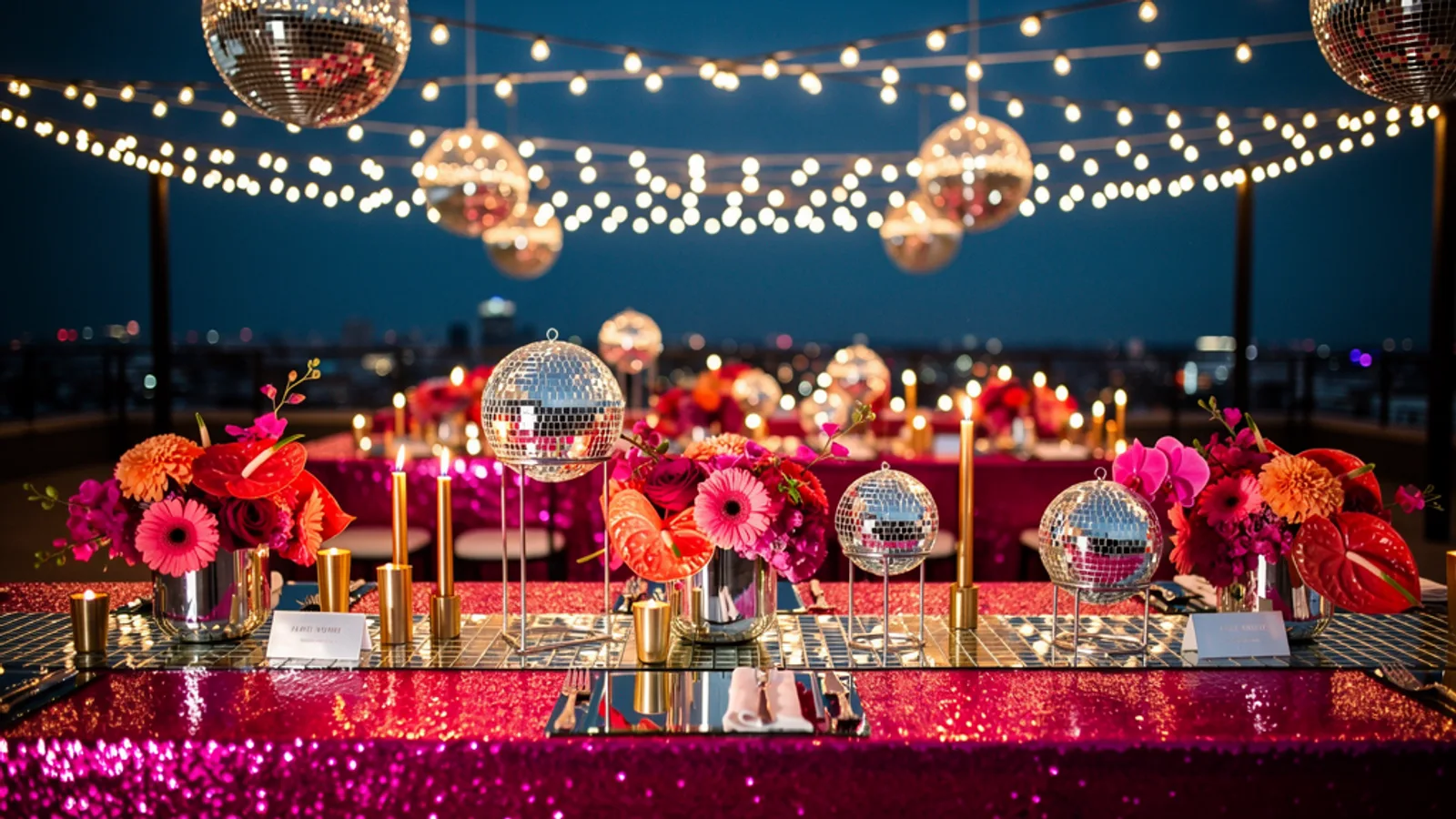
A disco wedding puts the party first and the tradition second. It is the maximalist end of the spectrum: mirror balls, metallic shine, saturated color, and a dance floor treated as the main event. Where most themes chase calm and cohesion, disco chases energy and joy, and it suits couples who want the reception to feel like the best night out they have ever thrown.
Pick a bold palette anyway
Maximalist does not mean random. The disco weddings that work still commit to a palette, just a bold one. Choose a lead like hot pink, tangerine, or electric purple, pair it with chrome or gold, and let one or two more brights play supporting roles. Anchoring the color is what separates a designed disco wedding from a chaotic one; the shine and energy read better against a palette than against everything at once.
Decor and materials
Shine is the whole point. Disco balls in clusters and different sizes, mirrored and metallic surfaces, sequin linens, colored candles, and bold, graphic signage all belong. Lean into a retro 70s edge if you want, and treat lighting and the dance floor as the primary spend. Fresh, unexpected touches like a disco-ball centerpiece or a metallic bar read fun rather than tacky when the palette holds.
The florals
Disco florals are bright and a little unexpected. Bold blooms in your palette colors — think hot pink and orange roses, ranunculus, and anthurium — arranged full and cheerful, sometimes with a metallic vase or a disco ball worked in. This is not the theme for muted or dried; keep the flowers as saturated as the rest of the room.
Where it works
Disco suits evening receptions and party-forward weddings, in lofts, urban venues, and any space with a real dance floor. It works in any season since it does not lean on seasonal color, and it pairs well with a simpler ceremony so the reception can be the moment the theme fully lets loose.