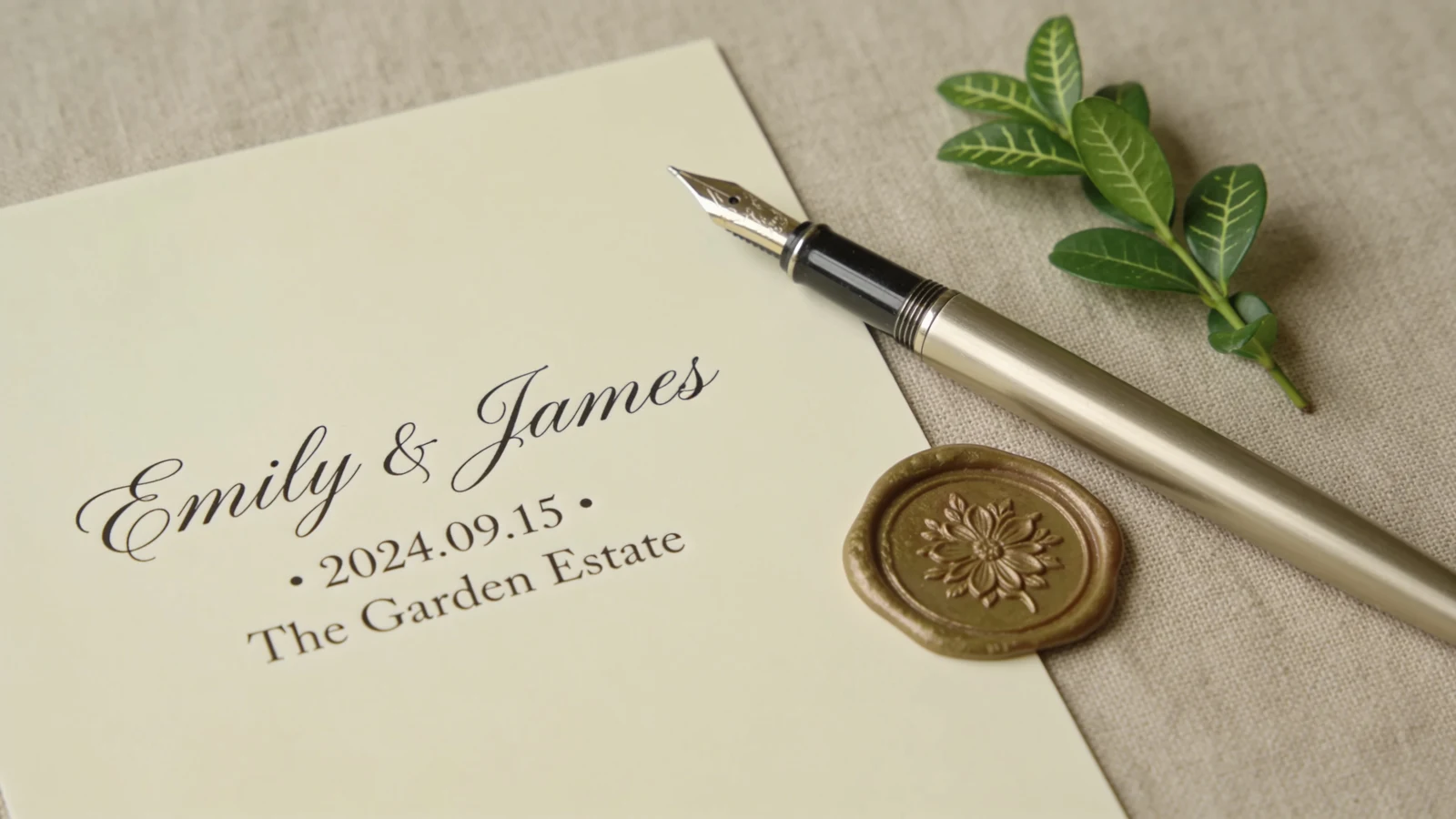
Wedding invitation wording
What to say and how to say it, with real examples for formal, casual, and modern weddings, plus who to list as hosts and how to handle divorced or blended families.
Wedding invitation wording →
Wedding invitations
Your wedding invitation carries the key details and sets the tone for the day — it is the first thing guests see. This guide covers what to include, the pieces of an invitation suite, when to send everything, how to word it, and how to make the invitation match the rest of your wedding.
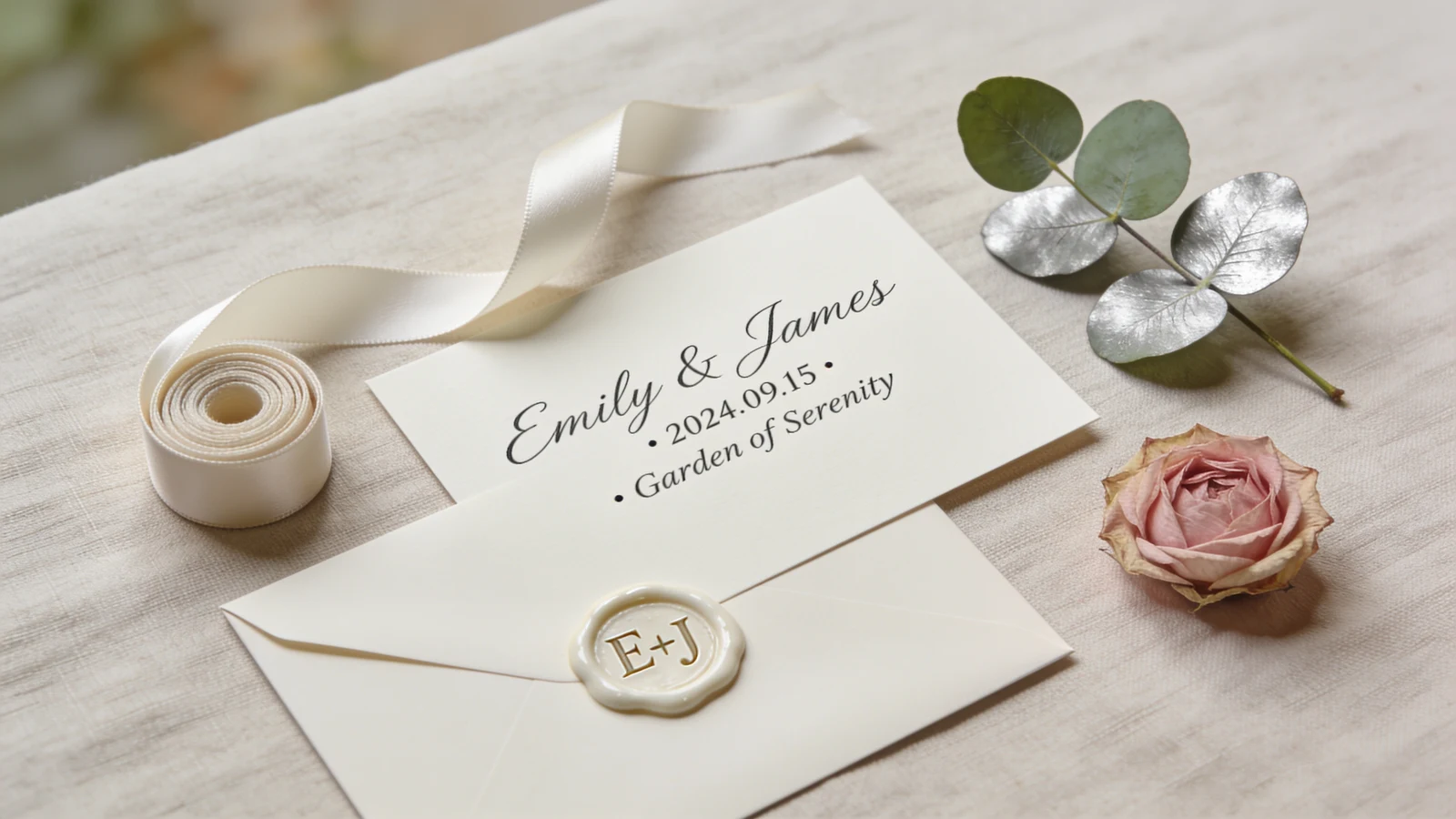
A wedding invitation does two jobs: it carries the practical details and it sets the tone for the day. The formality of the wording, the palette, and the paper all tell a guest what kind of wedding to expect before they read a single date. The essentials fit on one card:
Everything else — dress code, directions, reception details, registry, hotel blocks — belongs on enclosure cards or your website, not crammed onto the main invitation.
An invitation "suite" is the set of pieces that arrive together. You do not need all of them, but it helps to know what each does:
| Piece | What it does |
|---|---|
| Save-the-date | Sent months ahead so guests hold the day |
| Invitation | The main card with hosts, names, date, and place |
| Details card | Dress code, website, directions, reception info |
| RSVP card | The reply, with a deadline and meal choices |
| Envelope + seal | The first impression — often where the styling shows |
The wording and timing guides below go deeper on the two questions everyone has. Start with whichever you are stuck on.
The invitation is the first physical piece of your wedding anyone touches, so it should look like the day it is inviting people to. Pull three things straight from your aesthetic:
If your palette and style are not locked yet, that is the place to start: the color palette generator gives you copyable hex codes for a stationer, and the wedding themes guide helps you settle the overall look first.
Want the invitation to match the rest of your look? Take the quiz and get a full aesthetic (palette, mood board, and an invitation card design included) in about a minute.
The three things couples ask about most: wording, timing, and style.
What to say and how to say it, with real examples for formal, casual, and modern weddings, plus who to list as hosts and how to handle divorced or blended families.
Wedding invitation wording →
The stationery timeline: when to send save-the-dates and invitations, when to set the RSVP deadline, and how to adjust it for a destination wedding.
When to send wedding invitations →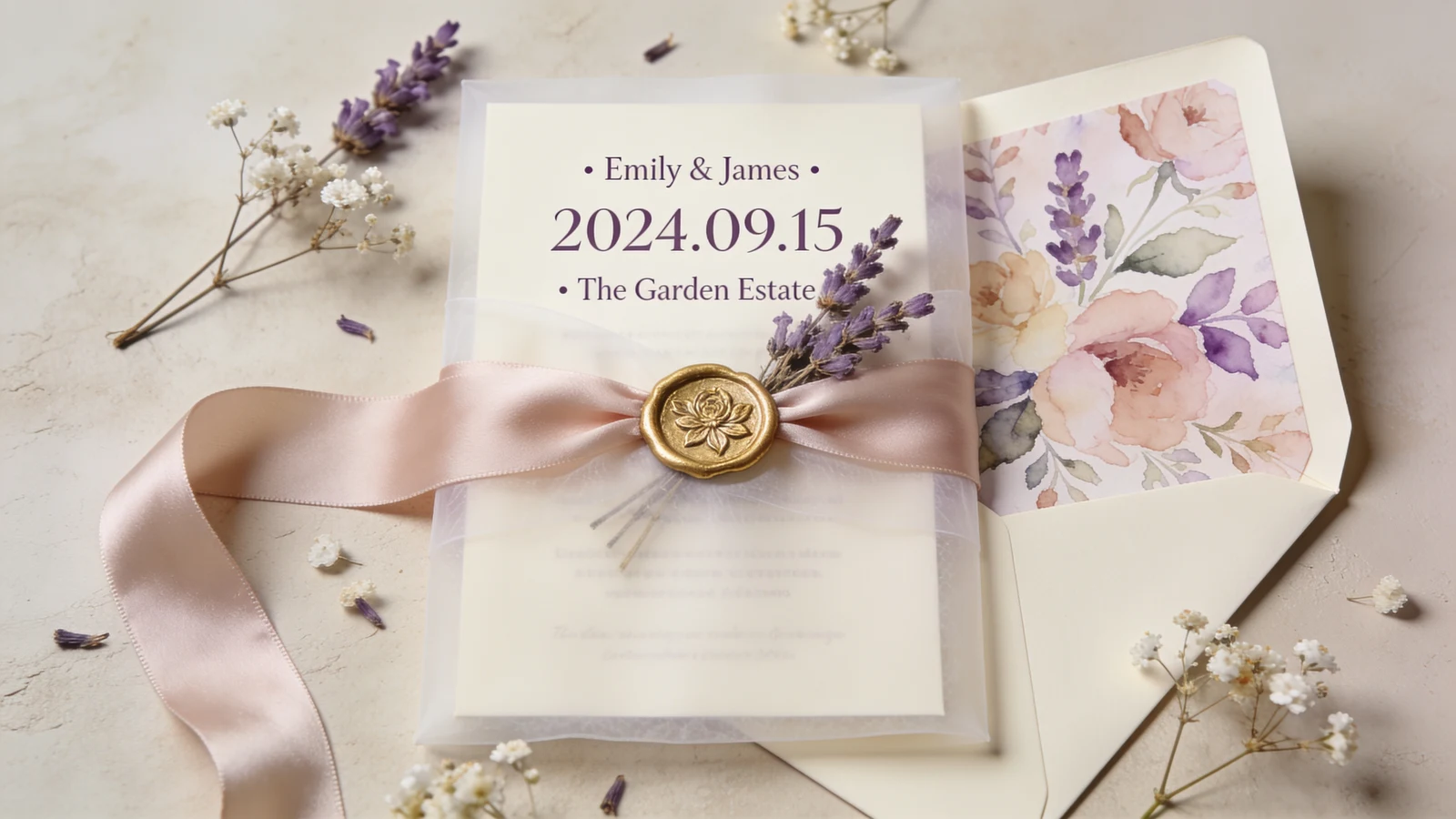
How to make the invitation match your wedding: pulling your palette, type, and materials from your aesthetic so the first thing guests see already looks like your day.
Aesthetic wedding invitations →Take the quiz and get your look as a pack of Pinterest-ready visuals — mood board, palette, florals, and an invitation card, built around the style you choose.